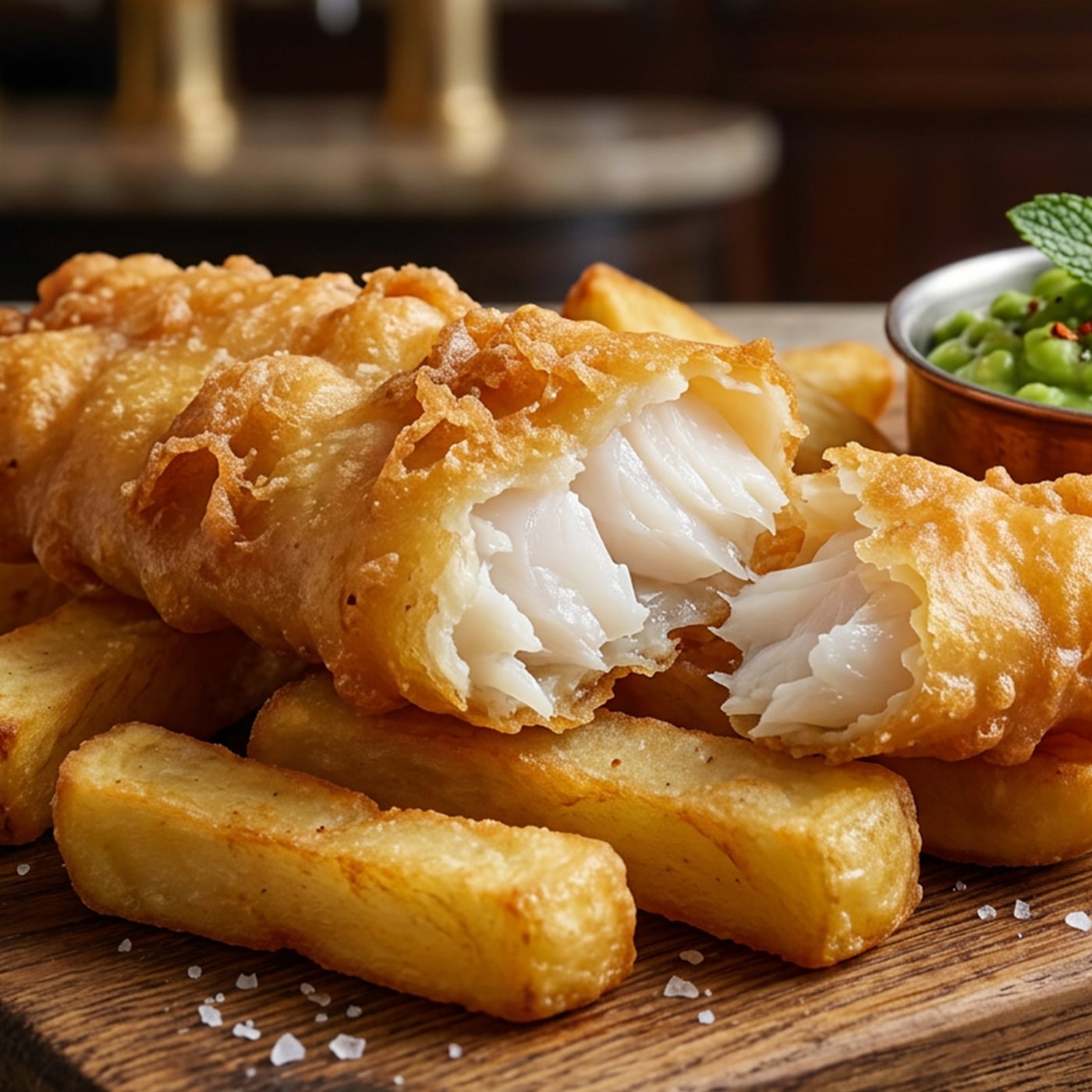
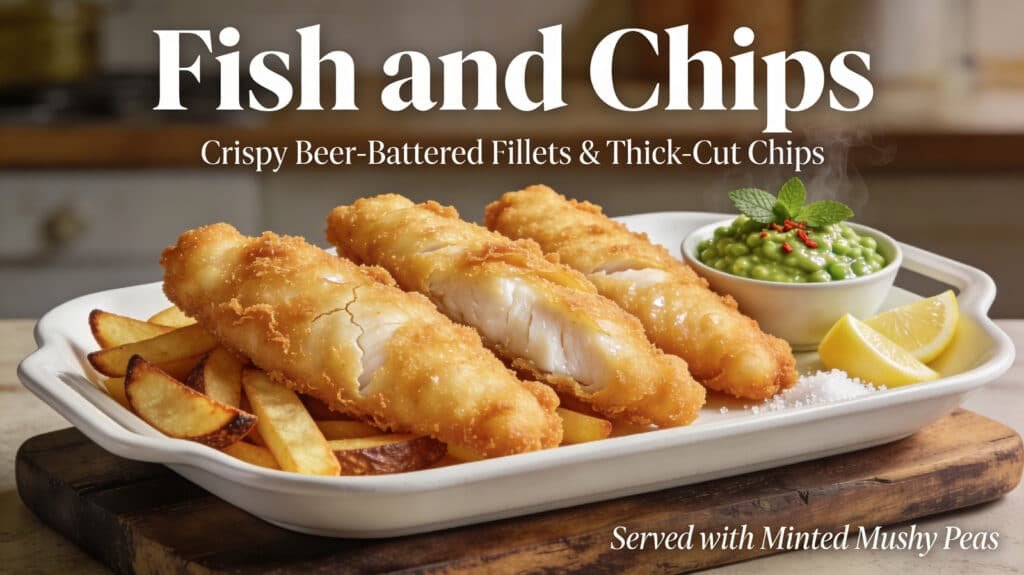
Ainsley Harriott’s Beer-Battered Fish and Chips is the ultimate British classic done properly at home — crispy, golden beer batter that shatters on the outside while keeping the fish perfectly moist and flaky within, triple-cooked chips that are fluffy in the middle and deeply golden on the outside, and a vibrant mushy minted pea purée with a gentle kick of chilli that lifts the whole plate. This is fish and chips as it should always taste, and it is far better than anything you will find in a takeaway box.
Table of contents
- Ainsley Harriott Beer-Battered Fish and Chips Ingredients
- How To Make Ainsley Harriott’s Beer-Battered Fish and Chips
- Recipe Tips
- 💡 Make It Your Own — Creative Twists
- What To Serve With Ainsley Harriott’s Beer-Battered Fish and Chips
- How To Store Ainsley Harriott’s Beer-Battered Fish and Chips
- Nutrition Facts (per serving, based on 4 servings)
- FAQs
- Try More Ainsley Harriott Recipes:
Ainsley Harriott Beer-Battered Fish and Chips Ingredients
For the Fish & Chips
- 1.5kg Maris Piper or Russet potatoes, peeled and cut into chunky chips
- 4 x 175g skinless and boneless white fish fillets (pollock, haddock, or cod), from a sustainable source
- ½ lemon, for squeezing
- 250g plain flour, plus extra for dusting
- ½ tsp sea salt
- 2 tsp baking powder
- A good pinch of cayenne
- 300–330ml cold beer
- Sunflower or vegetable oil, for deep-frying
- Sea salt and freshly ground black pepper
For the Mushy Minted Peas
- 400g peas (defrosted if frozen)
- 40g butter
- 6–8 mint leaves, chopped
- ½ medium-hot fresh chilli, de-seeded and chopped
To Serve
- Lemon wedges or vinegar
- Your sauce of choice for dipping
How To Make Ainsley Harriott’s Beer-Battered Fish and Chips
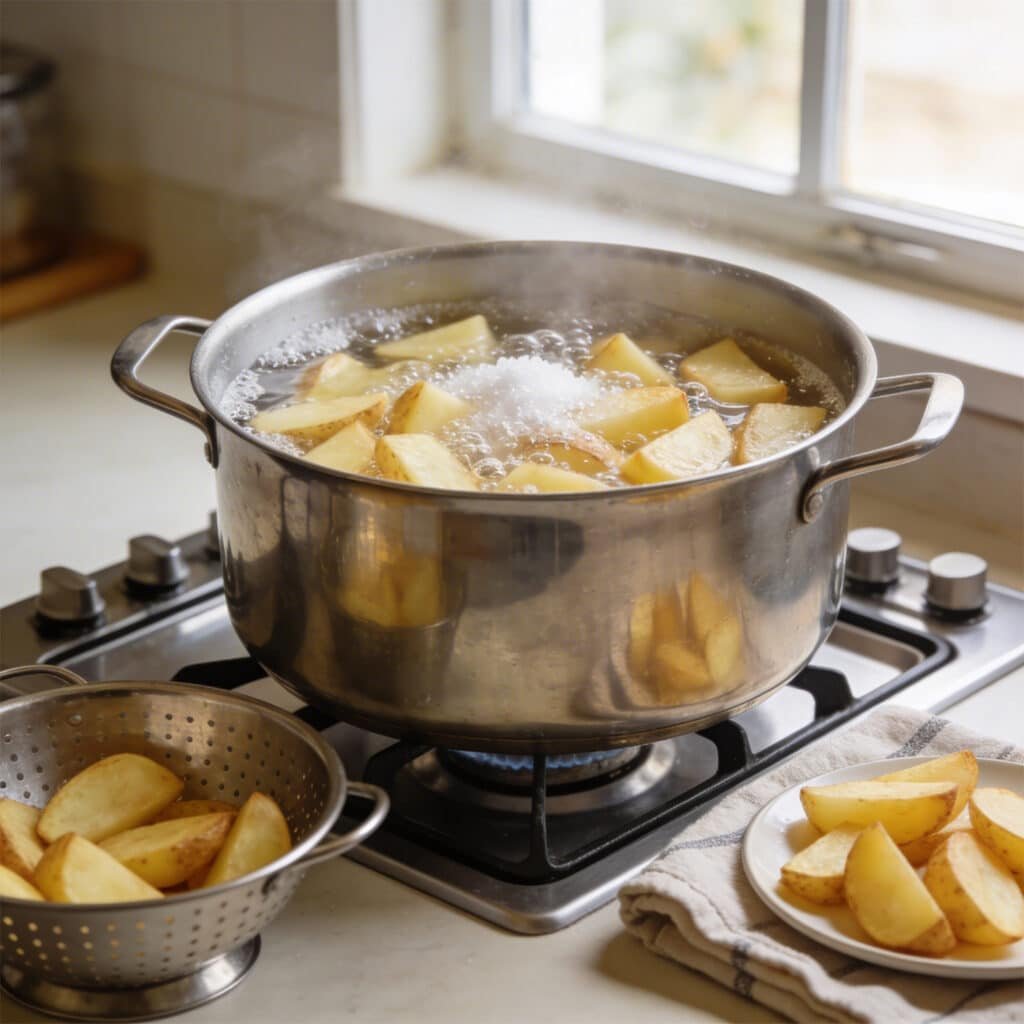
- Parboil the chips: Rinse the chips thoroughly under cold running water to remove excess starch. Place in a large pan of salted cold water and bring to the boil over a medium heat. Cook for 4–6 minutes until just tender — they should be cooked through but still holding their shape. Drain well and set aside on a tray lined with kitchen paper to dry completely.
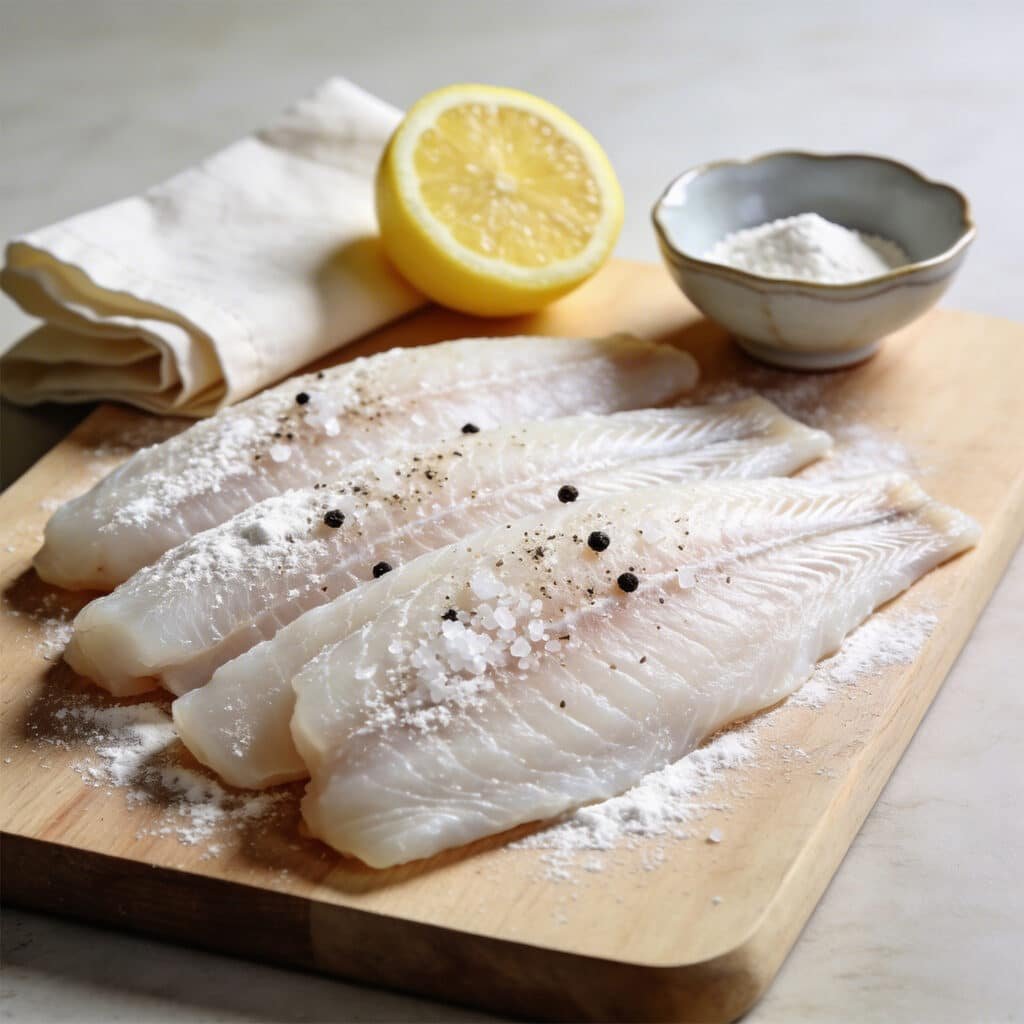
- Get the fish ready: Use kitchen paper to pat the fish fillets completely dry. This is important so that the batter sticks well. Put a little lemon juice on each fillet and lightly season it with salt and pepper. Lightly dust each fillet with plain flour, shaking off any extra.
- Make the beer batter: Sift the plain flour, sea salt, baking powder, and cayenne together into a large bowl. Whisking continuously, gradually pour in the cold beer until you have a thick, smooth, shiny batter. You may not need all the beer — stop adding it when the batter coats the back of a spoon thickly. Do not overwork the batter; a few small lumps are fine.
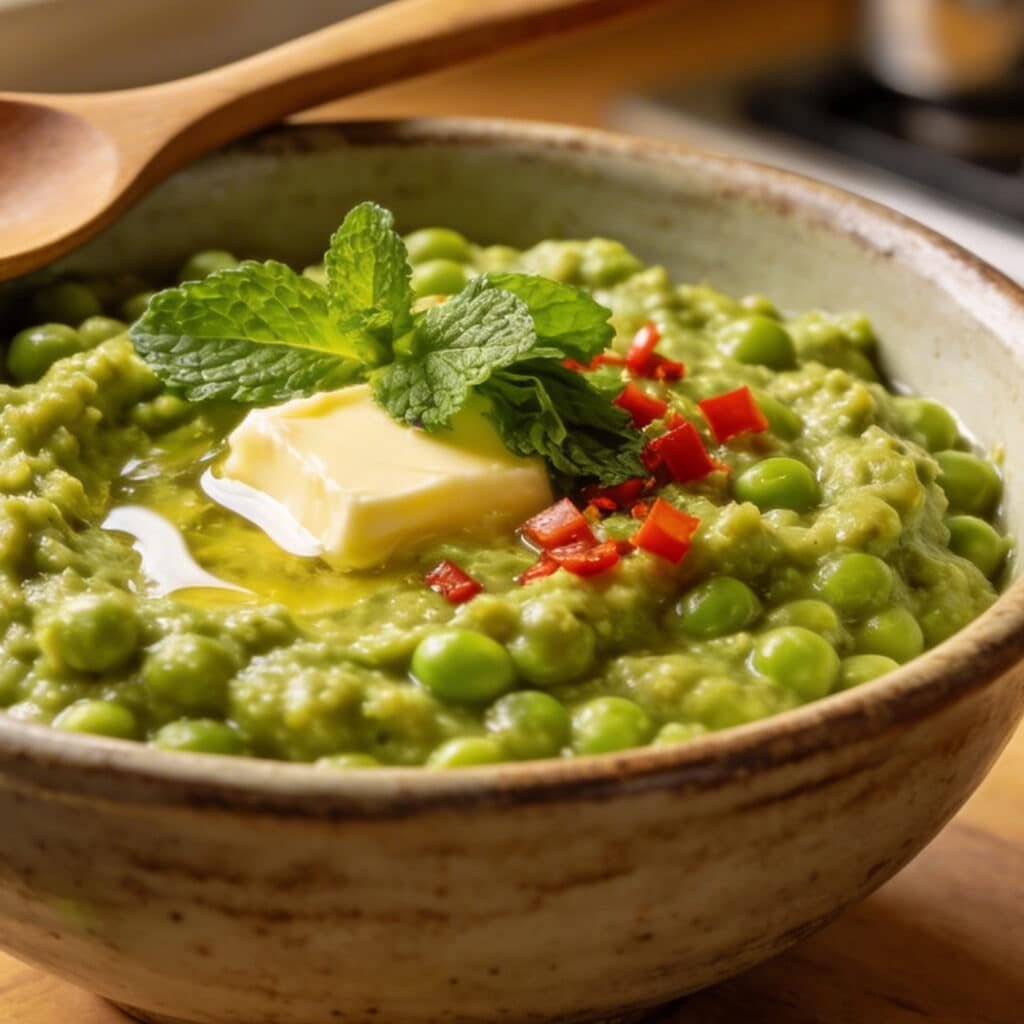
- Make the mushy minted peas: Bring just enough water to cover the peas to the boil in a small saucepan over a medium heat. Add the peas and cook for 2–3 minutes until tender. Drain, reserving a little of the cooking water. Transfer the peas to a food processor and add the butter, one tablespoon of the reserved cooking water, the chopped mint, and the chilli. Pulse to your preferred consistency — some people like a coarse crush, others prefer a smoother purée. Season well and keep warm.
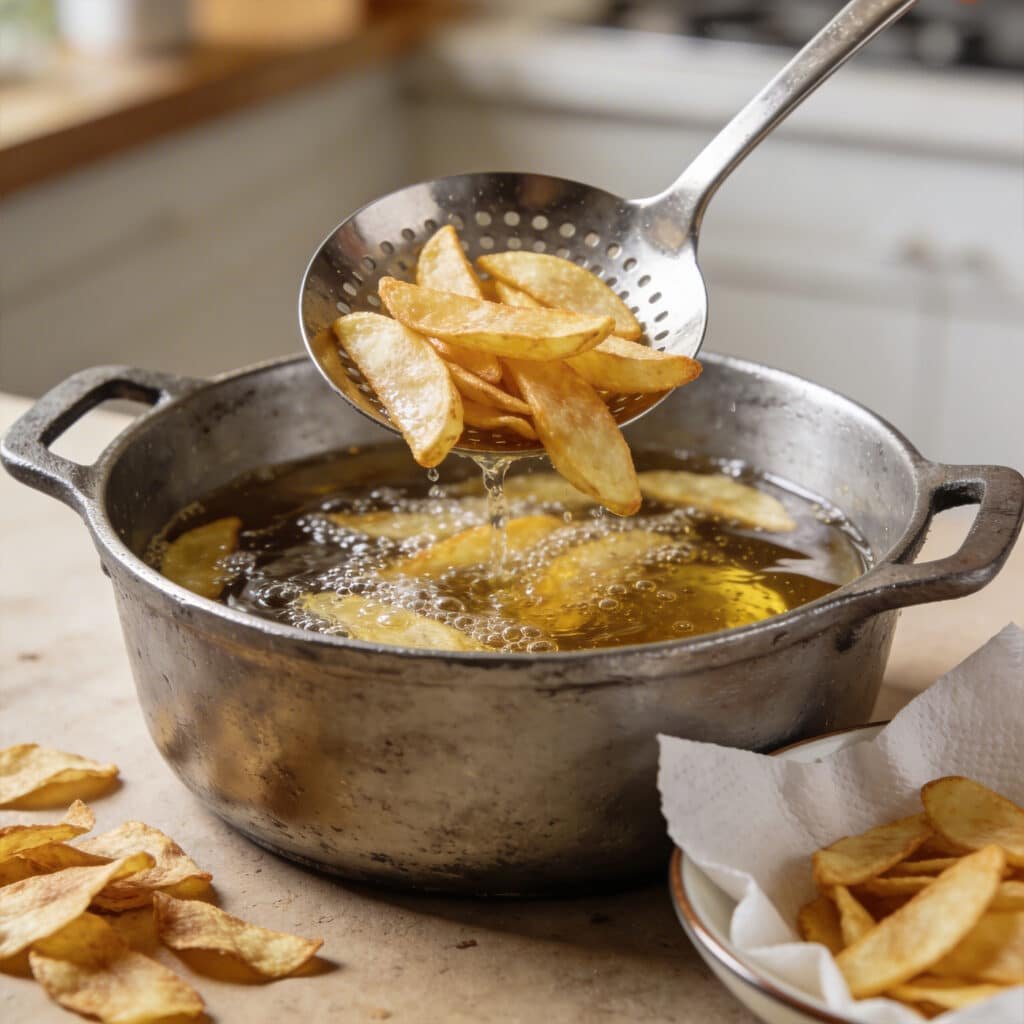
- First fry the chips: Heat enough oil for deep-frying in a deep-fryer or a deep, heavy-based saucepan to 180°C — the oil should come no more than two-thirds up the pan. If you do not have a thermometer, test with a drop of batter: it should sizzle and crisp immediately on contact. Pat the parboiled chips completely dry with a clean tea towel or kitchen paper and carefully lower them into the hot oil. Fry for 3–5 minutes until just beginning to colour. Remove with a slotted spoon, drain well on kitchen paper, and set aside.
- Fry the fish: Dip each floured fish fillet into the batter, turning to coat completely and letting any excess drip off. Carefully lower the fish into the hot oil one or two fillets at a time — never crowd the pan. Fry for 6–8 minutes, depending on thickness, turning halfway, until the batter is crisp, deeply golden, and the fish is cooked through. Remove and drain on kitchen paper. Season immediately with salt and keep warm while you finish the chips.
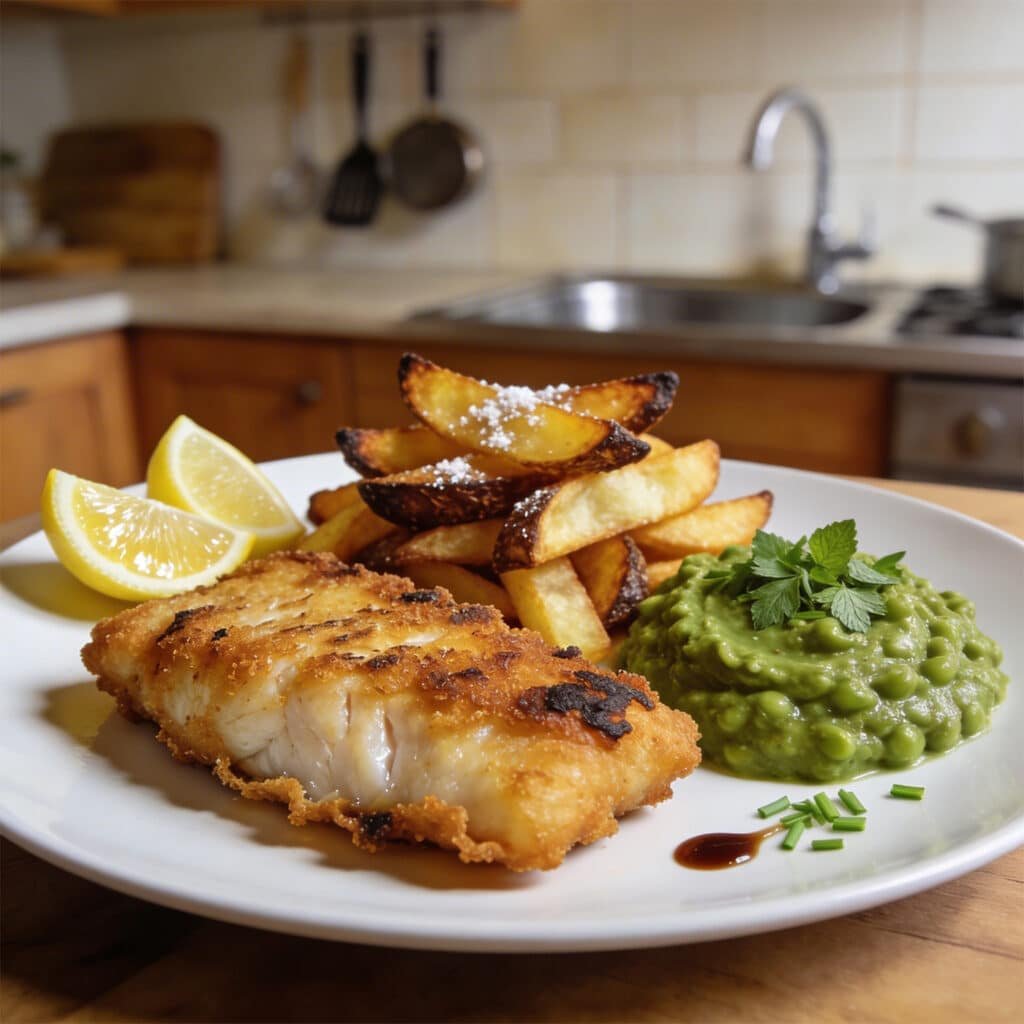
- Second and third fry the chips: Return the par-fried chips to the hot oil and fry for a further 3 minutes until deeply golden, crisp all over, and irresistible. Drain well on kitchen paper and season generously with salt the moment they come out of the oil.
- Serve: Plate the battered fish hot alongside the triple-cooked chips and a generous spoonful of mushy minted peas. Serve with lemon wedges or a splash of malt vinegar and your favourite dipping sauce on the side.
Recipe Tips
Use cold beer straight from the fridge: The temperature of the beer is not incidental — it is structural. Cold liquid reacts with the hot oil to create steam bubbles inside the batter as it fries, which is what gives beer batter its characteristic light, airy, shatteringly crispy texture. Room temperature beer produces a heavier, denser result. Keep the beer refrigerated right up until you need it.
Dry the fish and the chips thoroughly: Moisture is the enemy of crispiness at every stage of this recipe. Wet fish makes the batter slide off. Wet chips steam rather than fry and turn soft rather than golden. Pat everything dry with kitchen paper before it goes near the oil — it takes thirty seconds and makes an enormous difference.
Use Maris Piper potatoes: Maris Piper is the gold standard for chips in the UK because of its high starch and low moisture content. This combination gives you fluffy interiors and crispy exteriors when fried. Waxy potatoes hold too much moisture and produce chips that are soft inside and pale outside regardless of how long you fry them.
The triple-cook process is worth every step: Boiling first cooks the starch through. The first fry dries out the surface and begins building structure. The second fry at the same temperature creates the final deep golden crust. Each step serves a specific purpose — skipping any one of them produces a noticeably inferior chip.
Season the chips the moment they leave the oil: Salt adheres to chips when they are hot and slightly oily. If you wait until they cool, the salt simply falls to the bottom of the bowl and the chips taste bland. Season immediately, toss, and serve.
Choose sustainable fish: Ainsley specifically calls for fish from a sustainable source. Pollock is an excellent choice — it is widely sustainable, has a clean white flesh, and holds together beautifully in batter. MSC-certified haddock or cod work equally well. Check the Marine Stewardship Council’s fish guide for the most current sustainable choices available in UK supermarkets and fishmongers.
💡 Make It Your Own — Creative Twists
Swap the beer for sparkling water — For an alcohol-free version, use the same quantity of ice-cold sparkling water in place of beer. The carbonation does the same job as the beer in creating a light, bubbly batter, and the result is almost indistinguishable from the original. Add a teaspoon of malt vinegar to the batter for a touch of the flavour that beer would have provided.
Try a spiced batter — Add ½ teaspoon of turmeric and ½ teaspoon of smoked paprika to the batter alongside the cayenne for a golden, warmly spiced coating that gives the fish a beautiful colour and an extra layer of flavour without overpowering the fish itself.
Make it in the oven for a lighter version — As Ainsley himself notes, the chips can be baked at 220°C/200°C fan/Gas 7 for 18–20 minutes after parboiling, tossed in oil before going in. For the fish, brush the battered fillets with oil and bake on a wire rack over a tray at the same temperature for 20–22 minutes. The result is lighter and less indulgent, and still genuinely good.
Use the mushy peas as a base for something more — Stir a tablespoon of crème fraîche into the minted pea purée for a richer, creamier texture. It becomes something between a sauce and a dip that works brilliantly with the battered fish and turns the plate into something that feels restaurant-quality.
Add Old Bay seasoning to the batter — Replace the cayenne with ½ teaspoon of Old Bay seasoning for an American-inspired twist. It adds a complex mix of celery salt, paprika, and bay that transforms the flavour profile while keeping the same crispy batter technique.
What To Serve With Ainsley Harriott’s Beer-Battered Fish and Chips
Malt Vinegar: The single most traditional British accompaniment — a generous splash of malt vinegar splashed directly over the chips and fish before eating is non-negotiable for purists, and rightly so.
Tartare Sauce: A proper homemade tartare sauce — mayonnaise, finely chopped capers, gherkins, a little shallot, and lemon juice — is the classic dipping sauce for battered fish. It takes five minutes to make and is far superior to anything from a bottle.
You Might Also Like
-
 Ainsley Harriott Caribbean Fish Curry with Spinach and Coconut...This Ainsley Harriott Caribbean Fish Curry with Spinach and Coconut is a bright, comforting one-pan…
 -
Ainsley Harriott Light & Crunchy Fish Cakes RecipeThese Ainsley Harriott Light & Crunchy Fish Cakes are the kind of easy, comforting dinner…
-
Ainsley Harriott Plantain & Sweet Potato Rosti RecipeThis Ainsley Harriott Plantain & Sweet Potato Rosti Recipe is a vibrant island-style brunch dish…
-
Ainsley Harriott Fabulous Fish Pie RecipeThis Ainsley Harriott Fabulous Fish Pie is the kind of comforting, family-friendly dinner that never…
Mushy Minted Peas: Already included in this recipe and absolutely essential. The freshness and slight heat of the minted pea purée cuts through the richness of the batter and the oil with every bite.
Bread and Butter: A thick slice of white bread and butter alongside a proper plate of fish and chips is deeply traditional in many parts of the UK — simple, soft, and the perfect vehicle for mopping up any remaining pea purée.
Pickled Gherkins or Pickled Onions: The sharp acidity of pickled vegetables alongside fried fish is a classic British chip shop pairing. They reset the palate between bites and add a welcome contrast of texture and flavour.
Ainsley Harriott Beer-Battered Fish and Chips Recipe

Equipment
- Deep-Fryer or Deep Heavy-Based Saucepan
- Cooking Thermometer
- Large Saucepan
- Food Processor
- Slotted Spoon
- Kitchen Paper
- Large Mixing Bowl
- Whisk
Ingredients
For the Fish and Chips
- 1.5 kg Maris Piper or Russet potatoes peeled and cut into chunky chips
- 4 skinless and boneless white fish fillets (pollock, haddock, or cod) 175g each, from a sustainable source
- 0.5 lemon for squeezing
- 250 g plain flour plus extra for dusting
- 0.5 tsp sea salt
- 2 tsp baking powder
- good pinch of cayenne
- 300-330 ml cold beer straight from the fridge
- sunflower or vegetable oil for deep-frying
- sea salt and freshly ground black pepper to taste
For the Mushy Minted Peas
- 400 g peas defrosted if frozen
- 40 g butter
- 6-8 mint leaves chopped
- 0.5 medium-hot fresh chilli de-seeded and chopped
To Serve
- lemon wedges or malt vinegar
- your sauce of choice for dipping
Instructions
- Rinse the chips thoroughly under cold running water. Place in a large pan of salted cold water and bring to the boil over a medium heat. Cook for 4–6 minutes until just tender. Drain well and set aside on kitchen paper to dry completely.
- Pat the fish fillets completely dry with kitchen paper. Squeeze a little lemon juice over each fillet and season lightly with salt and pepper. Dust each fillet lightly all over with plain flour, shaking off any excess.
- Sift the plain flour, sea salt, baking powder, and cayenne into a large bowl. Whisking continuously, gradually add the cold beer until you have a thick, smooth, shiny batter. You may not need all the beer — stop when the batter coats the back of a spoon thickly.
- Bring just enough water to cover the peas to the boil in a small saucepan. Add the peas and cook for 2–3 minutes until tender. Drain, reserving a little cooking water. Transfer to a food processor with the butter, one tablespoon of reserved cooking water, the mint, and chilli. Pulse to your preferred consistency. Season well and keep warm.
- Heat enough oil for deep-frying in a deep-fryer or deep heavy-based saucepan to 180°C — no more than two-thirds up the pan. Test with a drop of batter: it should sizzle and crisp immediately.
- Pat the parboiled chips completely dry with a clean tea towel or kitchen paper. Carefully lower into the hot oil and fry for 3–5 minutes until just beginning to colour. Remove with a slotted spoon, drain well on kitchen paper, and set aside.
- Dip each floured fish fillet into the batter, turning to coat completely and letting any excess drip off. Carefully lower into the hot oil one or two at a time. Fry for 6–8 minutes depending on thickness until crisp and deeply golden. Remove, drain on kitchen paper, season with salt immediately, and keep warm.
- Return the par-fried chips to the hot oil and fry for a further 3 minutes until deeply golden and crisp all over. Drain well on kitchen paper and season generously with salt the moment they come out of the oil.
- Plate the battered fish hot alongside the triple-cooked chips and a generous spoonful of mushy minted peas. Serve with lemon wedges or malt vinegar and your favourite dipping sauce.
Notes
How To Store Ainsley Harriott’s Beer-Battered Fish and Chips
Best served immediately: Beer-battered fish and triple-cooked chips are at their absolute best the moment they come out of the oil. The batter begins to soften within minutes as steam from the fish migrates outward, and chips lose their crunch quickly once plated. Serve straight away without delay.
Refrigerate leftovers: Store any leftover cooked fish and chips in separate airtight containers in the fridge for up to 2 days. Store the mushy peas in a sealed container for up to 3 days.
Reheat: Reheat the fish and chips in the oven at 200°C/180°C fan for 10–12 minutes, or in an air fryer at 190°C for 6–8 minutes, until hot and re-crisped. Never reheat battered fish or chips in the microwave — the batter turns completely soft and the chips go limp and unpleasant.
Freeze raw fish: The raw fish fillets can be frozen for up to 3 months. Defrost fully in the fridge overnight before patting dry, flouring, and battering. Do not freeze fish that has already been battered or fried.
Mushy peas: The minted pea purée reheats well in a small saucepan over a low heat with a splash of water to loosen it. Stir gently and season again before serving.
Nutrition Facts (per serving, based on 4 servings)
| Nutrient | Amount |
|---|---|
| Calories | ~780 kcal |
| Protein | 44g |
| Carbohydrates | 82g |
| Fat | 28g |
| Saturates | 6g |
| Sugar | 4g |
| Salt | 2.2g |
Nutrition estimated per serving including batter, chips, and mushy peas, without dipping sauce.
FAQs
Ainsley calls for pollock, haddock, or cod — all white, flaky fish with a mild flavour that lets the batter take centre stage without competing. Haddock is the traditional choice in northern England and Scotland for its slightly sweeter flavour. Cod is the classic London chip shop fish. Pollock is the most sustainable of the three and produces an equally good result. Whatever you choose, make sure it is skinless, boneless, and from a sustainable source. The Marine Stewardship Council website lists currently certified sustainable options available in the UK.
Batter falls off fish for one of two reasons — either the fish was not dry enough before battering, or it was not dusted with flour first. The flour creates a dry, rough surface that the wet batter can grip onto. Without it, the batter simply slides straight off the moment the fish hits the oil. Pat the fish completely dry, dust thoroughly with flour, shake off the excess, then dip immediately into the batter and lower into the oil without delay.
Yes, but the type of beer affects the flavour. A light lager produces a clean, neutral batter that lets the fish flavour come through. A pale ale adds a slightly hoppy, malty depth. A dark stout produces a richer, more complex batter with a deeper colour. Avoid very sweet beers or fruit beers — they make the batter taste unbalanced. For a full breakdown of how different beers affect frying batter, Serious Eats has a detailed guide to beer batter science that is well worth reading before you choose.
Each stage of the triple-cook process does a specific job. Boiling cooks the starch all the way through so the interior is fluffy rather than dense. The first fry at 180°C drives out residual surface moisture and begins building the outer crust. The second fry — also at 180°C — finishes the crust to a deep, shatteringly crispy golden finish that a single fry simply cannot achieve. The result is a chip with a genuinely distinct contrast between the soft, fluffy interior and the crispy exterior — the same technique used in most serious restaurant kitchens. For a full scientific explanation of why this method works, BBC Good Food’s chip-cooking guide covers the process in detail.